|
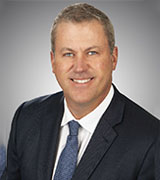
Dr. Loucks is a founding partner in both Peak Orthopedics and more
recently Integrative Performance Institute. He started in private
practice here in Denver in 2003 and has developed a very busy and
successful Hip and Knee Practice. He treats athletes of all ages with
surgeries ranging from cartilage transplants to arthroscopic knee
ligament and cartilage repair. Patients from all ages with a variety of
conditions benefit from his expertise in Minimally Invasive Hip and Knee
Replacement and complex joint revisions and reconstructions. In 2004,
he and his partner Dr. Rob Greenhow were the first surgeons in the
Denver area to perform Anterior Minimally Invasive Hip Replacement
Surgery (AMIS). In fact, every hip replacement he has performed since
has been through the Anterior approach, now numbering in the thousands!
He has pioneered Outpatient Total Joint replacement and has been
successfully performing minimally invasive outpatient hip and knee
replacement since 2013. Dr. Loucks is very fortunate to be an
International proctor, lecturer and teacher of these techniques all over
the world including Europe, Australia and North America. In addition,
he is a design surgeon for Medacta International, creating new
instruments and products developed to improve surgical techniques and
ultimately outcomes for patients. In conjunction with Dr. Greenhow and
their European colleagues he developed the MyKnee system allowing
surgeons to improve accuracy, sizing and alignment while performing knee
replacements through less invasive approaches.
Dr. Loucks received his undergraduate in Life Sciences (B.Sc.Hon) and
Masters of Science degrees at Queens University before receiving Medical
Degree, with honors, from the University of Calgary. He then completed a
prestigious Orthopedic Surgical Residency at the University of British
Columbia, in Vancouver, Canada, serving as the Chief Resident in his
final year. He is board-certified in Orthopedic Surgery as both a Fellow
of the Royal College of Physicians and Surgeons of Canada and through
the American Board of Orthopedic Surgeons. He relocated to Colorado in
2003, where he completed an AO Trauma Fellowship at St. Anthony’s
Central Trauma Center in Denver and founded Peak Orthopedics with Dr.
Greenhow in 2005.
In the past, he has served as a consultant and teacher for hip and knee
procedures for Zimmer and Conformis. Dr. Loucks is the past Chairman of
Orthopedics at the Medical Center of Aurora and the previous Chief of
Orthopedics and Neurosurgery at Sky Ridge Medical Center.
Orthopedic Surgery Fellowship
-
Panorama Orthopedics Trauma Fellowship 2003
Orthopaedic Surgery Residency
-
University of British Columbia School of Medicine, 1998-2003
Medical School
-
University of Calgary, 1995-1998
Masters of Science
-
Queen's University, 1993-1995
Undergraduate Bachelor of Life Sciences, with Honors
-
Queen's University, 1989-1993
Specialty Certification
-
Fellow, AO Trauma 2003
-
American Board of Orthopaedic Surgery, 2004
-
Royal College of Physicians & Surgeons, 2003
Affilations
Hear about the minimally invasive anterior approach to hip replacement from Drs. Greenhow and Loucks as seen on Colorado & Company.
A recent article about progress in hip replacement surgery. The article
features Dr Greenhow and Dr Loucks. Outpatient anterior hip replacement
surgery: The future is here
Click here if you are interested in learning about a less-invasive
partial knee replacement that is custom made just for you.
Visit www.craigloucksmd.com for more information.
|